Best Practices for Hanging a Felt Stetson
A felt Stetson costs real money. A decent one runs a few hundred dollars, and the higher X-rated hats — the number marks the felt blend, from 4X up through 20X and beyond — can push past a grand. So it stings when the damage comes from something dumb: you hung the hat on the wrong hook for two weeks, and now there’s a crease down the crown or a brim that won’t sit flat anymore.
The fix isn’t complicated. It’s mostly about not hanging the hat from the one part that can’t take the weight.
Felt holds a shape, good or bad
Stetson felt is rabbit or beaver fur, or a blend of the two, matted and pressed and steam-set into shape. That’s why a good felt hat can take a crease, shed light rain, and spring back from everyday handling. It’s also why the damage sticks. Felt holds a bad shape just as stubbornly as a good one. A dent from a hook, a pinch from a clip, a flat spot from sitting on its brim — none of it brushes out.
The crown crease is the weak point
The crease in the top of a Western hat isn’t decoration. A Cattleman crease, a Pinch Front, a Gus — each one is a shaped fold that gives the crown its profile and the hat its character. That fold is also where a hat is most likely to crease wrong. Press a single point into the crown and you’re not just denting felt, you’re fighting a shape that was steam-set on purpose.
This matters because most hooks concentrate the hat’s weight on exactly that spot.
The safest storage is often not a hook
Before we get to hanging, the honest answer is that Stetson’s own care guidance says the safest storage is upside down on its crown, on a clean surface or in a hat box. Crown down, brim up. The brim carries nothing, and the crown keeps its shape.
But if you wear the hat every day, putting it in a box every night is unrealistic. You want it on a wall near the door, where you can grab it. That’s where hanging comes in, and where most of the damage happens.
Hang it crown-up on a wide cradle
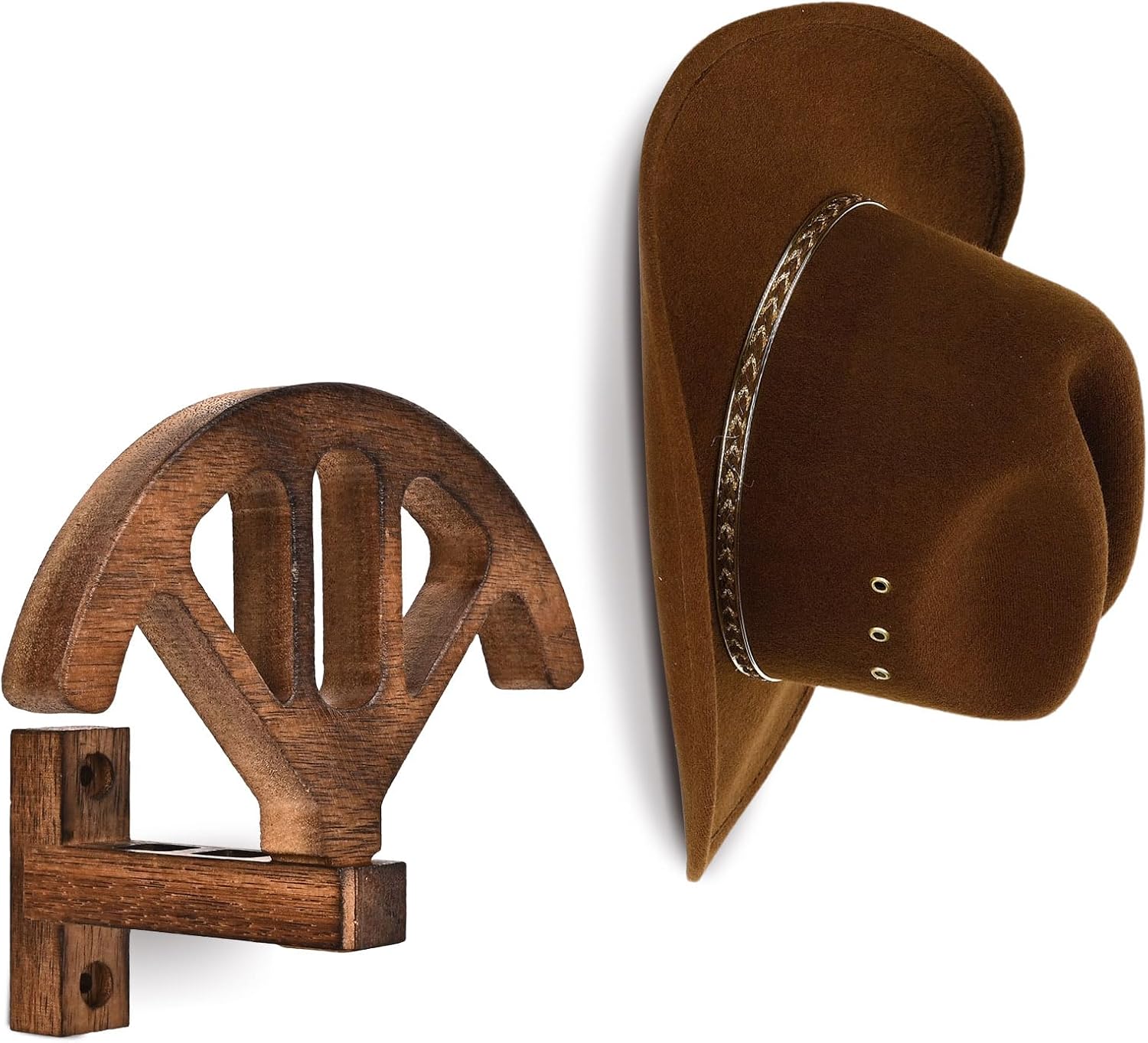
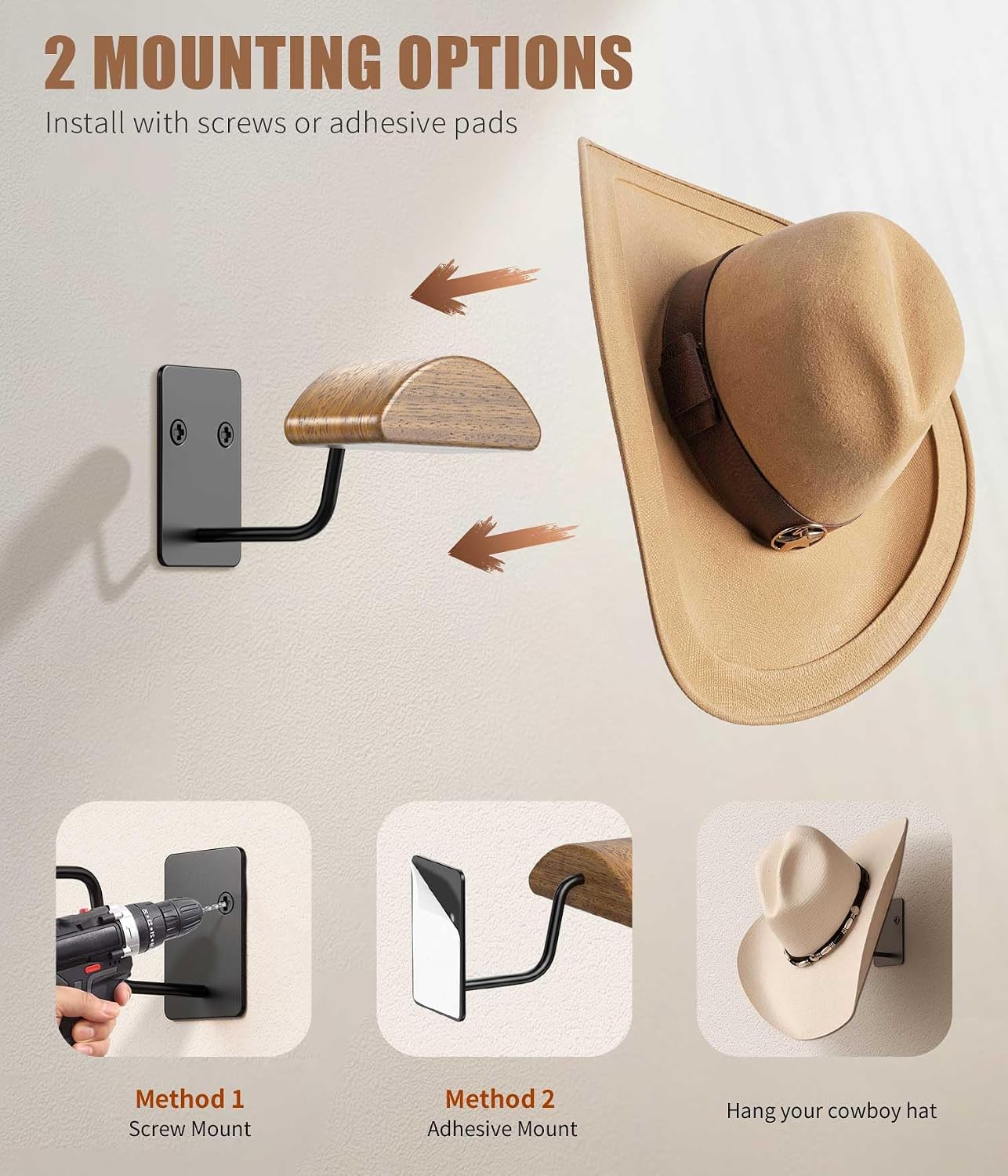
When you do hang a felt hat, the right way is crown-up on a wide cradle that carries the full brim. The weight spreads across the brim’s curve instead of pressing on a single point, so nothing sags or creases.
A good cradle is curved and smooth, not a narrow peg. Wood is the usual choice, because the curve can be cut to match the brim. I went through the mount types in detail in this cowboy hat hangers guide, if you want the options side by side.
Two ways people get it wrong
The first mistake is hanging the hat from the brim. A single peg under the brim puts the hat’s whole weight on one small point, and over days or weeks that stretches the brim and drags the curl out of it. Brims don’t bounce back from that.
The second is hanging by the crown from a narrow hook. This one is subtler, because a peg that genuinely cradles the crown is fine — Filson’s care guide points out that a peg or hook takes the weight off the brim. But a thin coat hook presses on a tiny spot, and felt creases where it’s pressed. If you’re going to hang from the crown, use something wide, and rotate the hat every so often so it isn’t resting on the same spot forever.
Clothespins and spring clips are the worst of both. They pinch, and pinch marks don’t brush out.
Heat is the silent killer
Felt hates heat more than anything. Radiators, heating vents, a sunny window, the inside of a car in summer — all of them dry the felt and shrink the leather sweatband. A hat that fit fine in October can be too tight in March if it spent the winter hanging over a heater.
The same rule applies to a wet hat. If it’s been out in the rain, shake off the excess water and let it air dry at room temperature. Not near a fire, not with a hair dryer, not on a radiator. While it dries, keep the brim from resting on anything.
Sweat is worse than rain
Rain dries. Sweat soaks in and stays. If you wear the hat hard — ranch work, rodeo, a long summer day — turn the sweatband out when you take it off and let it dry before you hang it back up. Sweat and hair product that soak into the leather band will darken it, crack it, and eventually work into the felt itself.
This is also why a plastic storage box is a bad idea for long-term storage. Plastic traps whatever moisture is still in the hat. A breathable hat box lets it move.
Grab it by the brim, not the crown
Most of the handling damage I see comes from how people pick a hat up. They pinch the crown, squeeze it, jam their fingers into it. Felt is sturdy, but it isn’t immune to finger oil. Repeated pinching stains the felt over time and can crack it.
The habit worth building is simple: pick the hat up by the brim, front and back, and put it down the same way. Stetson and Resistol both recommend it, and it takes about a week to make it automatic.
Dust it off before you hang it
A soft-bristle brush, worked counterclockwise around the felt, lifts loose dust before it grinds into the fibers. Resistol recommends this specifically for fur felt. It’s thirty seconds, and it keeps the felt from going dull or grimy in the first place.
Everyday and long-term are different jobs
For a hat you wear most days, a wall cradle near the door is the right answer: visible, reachable, and off the brim. For a hat that’s going away for a season, use a hat box large enough for the whole crown and brim, with nothing stacked on top. Never store hats stacked on each other. The weight of the top hat crushes the one underneath, and you won’t notice until you pull it out in the spring and the crown has a flat side.
A routine that covers it
Here’s the whole thing, in order. Brush the crown and brim. If the hat’s damp, set it crown-down with the sweatband out and let it dry. Hang it crown-up on the cradle, away from heat. Rotate it now and then if it hangs from the crown. Box it up, breathable, for the off-season.
That’s it. If you’re hanging without wanting to damage the wall either, the how to hang hats without damage guide covers the renter-friendly and adhesive options. And if one hat turns into four, the best hat organizer roundup is where I’d start.
A felt Stetson will outlast you if you treat it right. The hat isn’t fragile. It’s just easy to hang wrong.